The Art of Milk and Aesthetics: Retro Design meets Modern Microfoam
Update on Jan. 9, 2026, 1:33 p.m.
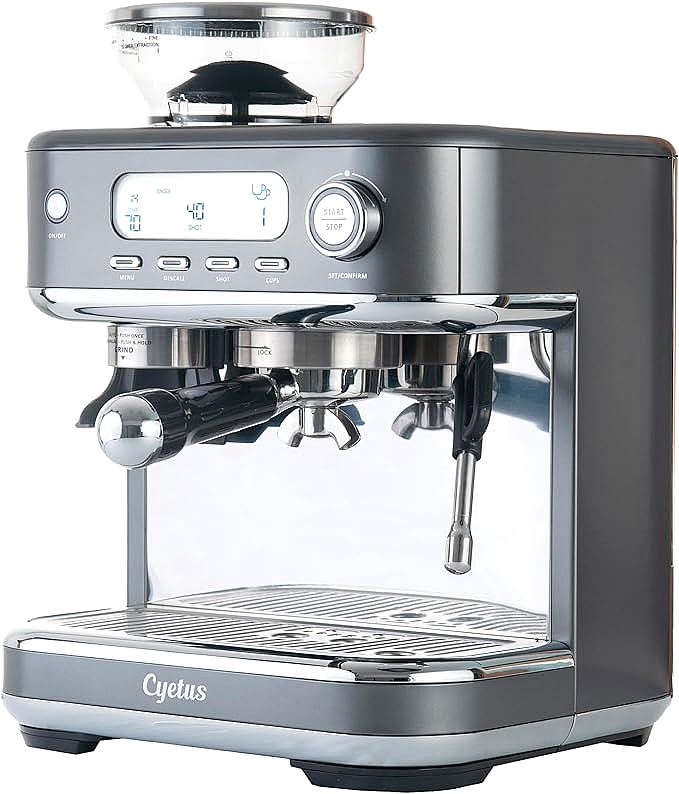
In the world of coffee, the espresso shot is the foundation, but the milk is the structure. For the millions of latte and cappuccino lovers, the ability of a machine to transform cold milk into hot, velvety microfoam is just as critical as its ability to brew. The DRAGONBALL CM004, with its vibrant red chassis and retro styling, promises to bring this café capability into the home. But beyond its eye-catching aesthetic lies a specific engineering challenge: how to generate steam power in a compact, single-circuit system.
This article explores the “soft science” of milk texturing and the “hard reality” of single-boiler workflows. We will dissect the thermodynamics of steam generation, the technique required to master microfoam on a home machine, and the psychological appeal of retro design in modern appliances. This is where the artistry of the barista meets the constraints of the machine.
The Thermodynamics of Steam: The Single-Circuit Challenge
Commercial espresso machines often have two boilers: one for brewing coffee (approx. 200°F) and one for steam (approx. 250°F+). This allows baristas to brew and steam simultaneously. The DRAGONBALL CM004, like most compact home machines, operates on a single circuit. It has one heating element (the thermoblock) that must do double duty.
The Phase Change Energy Barrier
To create steam, water must undergo a phase change from liquid to gas. This requires a significant injection of energy (latent heat of vaporization). * The Temperature Gap: Brewing happens at roughly 200°F. Steaming requires the thermoblock to ramp up to over 250°F to generate sufficient pressure. * The Workflow Implication: This physics dictates the workflow. You cannot brew and steam at the same time. Furthermore, there is a “transition time.” After brewing your espresso, you must engage the steam switch and wait for the thermoblock to superheat the water. The pump then pulses small amounts of water into the superheated block, where it instantly flashes into steam and exits the wand.
The “Hot Water” Phenomenon
A common user complaint (as noted in reviews) is the steam wand dispensing hot water instead of steam. This is often a thermodynamic symptom. If the thermoblock hasn’t reached the critical temperature for flash vaporization, or if the water flow rate is too high, the water doesn’t fully convert to gas. It exits as a high-pressure spray of hot water. * The Fix: This is why “purging” is essential. Before inserting the wand into the milk, the barista must open the steam valve into a drip tray or cloth. This clears any condensation (liquid water) from the line and gives the thermoblock a moment to stabilize at steam temperature. Only when a steady plume of dry steam appears is the machine ready for texturing.
Microfoam Physics: Creating Texture, Not Just Bubbles
The goal of steaming is not just to make milk hot; it is to create Microfoam. Microfoam is a matrix of microscopic air bubbles suspended in milk proteins (whey and casein) and fats. It is smooth, glossy, and sweet—the texture of wet paint.
The Aeration and Rolling Phase
On a powerful commercial machine, steaming takes seconds. On a home machine like the CM004, it is a slower, more deliberate process, which can actually be an advantage for beginners.
1. Stretching (Aeration): With the wand tip just breaking the surface, air is sucked into the milk. The 1350W power of the CM004 is sufficient to create a vortex, but the lower steam pressure compared to commercial boilers means this phase takes longer. This gives the user more control to introduce just enough air.
2. Texturing (Rolling): Once the milk reaches body temperature, the wand is submerged. The goal now is to use the steam pressure to spin the milk in a whirlpool. This turbulence smashes the large air bubbles into tiny ones. The single-hole or double-hole tip of home machines requires precise positioning to achieve this rotation.
The Temperature Ceiling
Milk proteins begin to denature and curdle above 160°F (70°C), destroying the foam structure and sweetness. Because home machines steam slower, there is a risk of waiting too long for the texture to develop and inadvertently overheating the milk. Using a thermometer or learning to gauge temperature by hand (when the pitcher becomes too hot to touch comfortably) is a critical skill for the home barista using a thermoblock machine.

The Psychology of Retro Design
The DRAGONBALL CM004 is unapologetically styled. Its rounded edges, chrome accents, and vivid red color evoke the aesthetic of 1950s Italian diners or American muscle cars. This Retro-Futurism is a powerful psychological trigger in appliance design.
Emotional Durability
In an era of disposable black plastic gadgets, objects with character induce a sense of attachment. We are more likely to care for, repair, and keep an appliance that we have an emotional connection to. The “statement piece” nature of this red machine turns it from a utility into a piece of decor. It anchors the kitchen counter, signaling that coffee making is a ritual to be celebrated, not just a caffeine delivery system.
Analog Feel in a Digital Age
Even though the machine uses a touchscreen (a modern interface), the physical act of locking in the portafilter and the tactile feedback of the steam wand tap into a desire for analog experiences. The retro look sets the stage for a manual process. It tells the user: “This is hands-on. You are making this.” This alignment of aesthetic and function enhances the satisfaction of the brewing ritual.
Conclusion: The Integrated Home Cafe
The DRAGONBALL CM004 is a machine of dualities. It balances the high-heat demands of steam with the precision needs of espresso, all within a single heating circuit. It wraps modern thermal technology in a nostalgic, retro shell.
For the home user, mastering this machine is about mastering timing and transition. It involves understanding the rhythm of the thermoblock—brewing the shot, switching to steam, purging the line, and texturing the milk before the espresso cools. It is a dance of thermodynamics.
When performed correctly, the result is a cappuccino that rivals the café: rich espresso cutting through sweet, velvety milk, served from a machine that looks as good as the drink tastes. It transforms the kitchen into a personal café, proving that with a little science and a little style, the perfect cup is always within reach.