The Science of Steaming: Why Moist Heat Is the Key to Nutrient Retention
Update on Nov. 13, 2025, 11:16 a.m.
In the pursuit of a healthy, efficient lifestyle, the kitchen has become a battleground. We seek nutritious meals but are constrained by time. This conflict has fueled a resurgence of one of the oldest and simplest cooking techniques: steaming.
But why is steaming so consistently lauded as the pinnacle of healthy cooking? The answer isn’t “magic”; it’s a fascinating intersection of physics and chemistry. Steaming is a method that gently and efficiently cooks food while rigorously preserving its nutritional integrity.
Let’s deconstruct the science of why steaming is superior and how modern appliances, like a typical 3-tier electric steamer, are engineered to deploy this science for the modern, busy household.
The Physics of Steam: Gentle, Efficient Heat
The power of steaming lies in a unique physical property of water. When water boils (212°F / 100°C), it converts to steam. This steam carries a massive amount of energy known as the “latent heat of vaporization.”
Think of each steam molecule as a tiny, supercharged courier. When these couriers touch the surface of cooler food, they instantly condense back into liquid. In that moment, they release all that stored energy directly and uniformly onto the food.
This “moist heat” transfer is incredibly efficient and surprisingly gentle. Unlike the “dry heat” of an oven or pan (350°F+), which attacks the food’s exterior, steam cooks at a consistent 212°F. This prevents the outside from scorching before the inside is cooked, ensuring an evenly tender result without added fats or oils.
The Nutritional Argument: Steaming vs. Boiling vs. Roasting
This gentle efficiency is the key to nutrient retention. The most significant advantages are seen with delicate, water-soluble vitamins.
-
Steaming vs. Boiling: When you boil broccoli, you are submerging it in a “solvent” (water). Its valuable water-soluble vitamins (like Vitamin C and B-complex vitamins like folate) “leach” out into the surrounding water, which is then typically discarded. Steaming avoids this entirely. The food is cooked by the steam but never submerged, keeping those nutrients locked within the vegetable. This is why steamed vegetables have a more vibrant color—it’s a visual cue of their preserved phytonutrient content.
-
Steaming vs. Roasting: High, dry heat (roasting or grilling) is a different kind of enemy. While it doesn’t cause leaching, the extreme temperatures (often 400°F+) can simply destroy heat-sensitive vitamins. Steaming’s consistent 212°F is hot enough to cook, but gentle enough to preserve these delicate compounds.
The result is food that is as nutritionally close to its raw state as possible, all while being tender, flavorful, and easy to digest.

Deconstructing the 3-Tier Steamer: The “How”
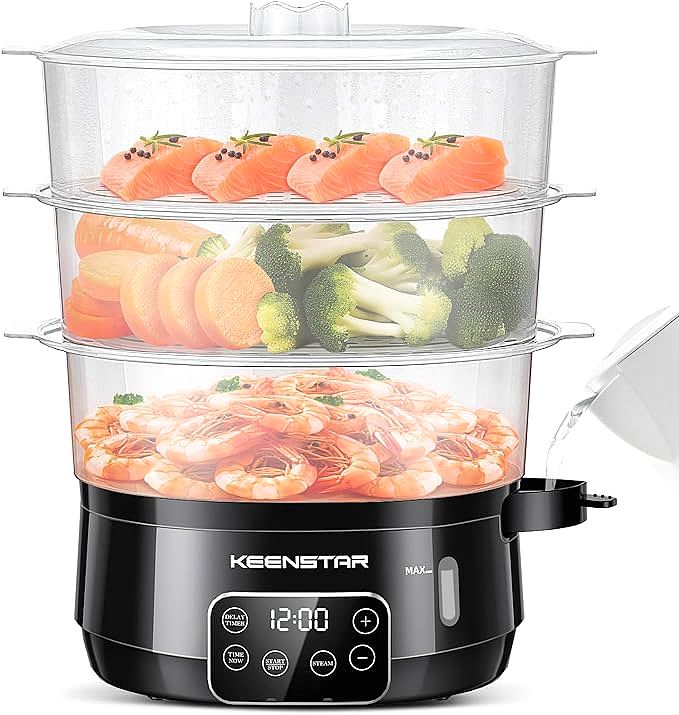
Understanding why steam is superior leads to the how: How do we apply this science efficiently, especially for weekly meal prep? This is where the engineering of a modern 3-tier electric food steamer comes in.
We can use a popular, high-capacity model (around 13-14 QT) as a case study to deconstruct its design.
1. The “Turbo Steam” System (800W)
The first hurdle to convenience is wait time. An 800W heating element paired with a “turbo” or “accelerator” design is engineered to do one thing: bring a small amount of water to a boil fast (e.g., in under 30 seconds). This “rapid start” system means the cooking process begins almost immediately, a critical factor for busy individuals.
2. The 3-Tier Workflow
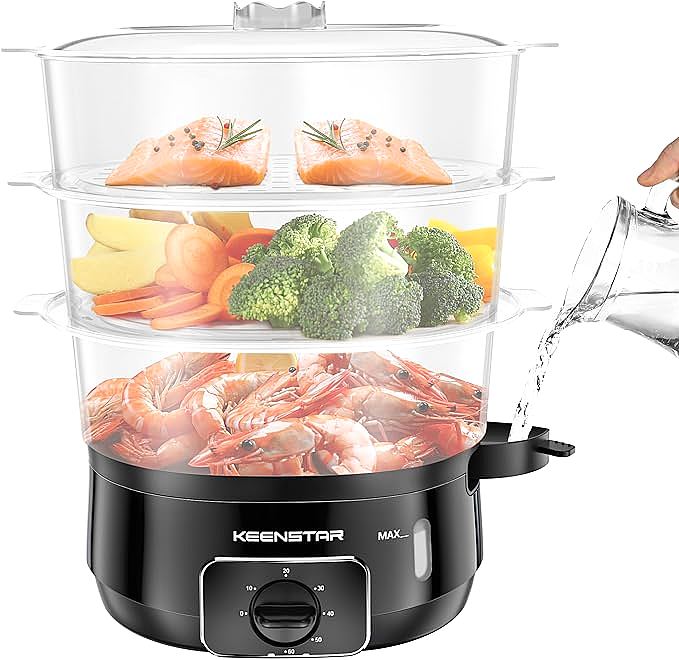
The 13.7QT, 3-tier design is a “simultaneous cooking” workstation. This is its core value for meal prepping. It allows you to steam proteins (fish, chicken), vegetables (broccoli, carrots), and even grains (in a separate bowl) all at once. The “unique steam hole” design is critical for ensuring steam rises and circulates evenly through all three levels.
3. The Drip Tray: Engineering for Flavor Integrity
A major flaw in multi-level cooking would be flavor mixing. This is solved by a drip tray. This tray sits below the baskets and catches juices and condensation. This prevents the juices from a salmon fillet on a lower tier from dripping onto the vegetables above it (or vice-versa), ensuring the flavor purity of each component.

4. Material Safety: The “BPA-Free” Mandate
For a health-focused device, the cooking material is paramount. The primary hesitation for many users is cooking with plastic. This is why the “BPA-Free” specification is non-negotiable. It addresses this core concern, assuring users that the heat-resistant (thermostable) material will not leach unwanted chemicals into the food. For many, this is the deciding factor that makes the convenience of a lightweight, easy-to-clean plastic steamer acceptable.
5. Ergonomics: The “Set-it-and-Forget-it” Features
Finally, the system is designed for a low-friction user experience:
* 60-Minute Timer: Allows you to set the precise cooking time and walk away.
* Anti-Dry Protection: A sensor that automatically shuts the unit off if the water runs out, preventing damage.
* Side Water Inlets: A thoughtful design that allows you to add more water during a long cooking cycle without having to disassemble the hot tiers.
These features, combined, turn steaming from an active, pot-watching chore into a passive, automated process.

The Healthy Bottom Line
The science is clear: steaming is a superior method for preserving the delicate, water-soluble nutrients that are often lost or destroyed by other cooking methods. A well-designed electric food steamer is not a “gadget”; it is a purpose-built tool designed to make this superior cooking method as efficient and convenient as possible.
By integrating a fast steam system, a high-capacity workflow, and critical safety features (like BPA-free materials and auto-shutoff), it removes the friction between the desire for healthy eating and the reality of a busy schedule.