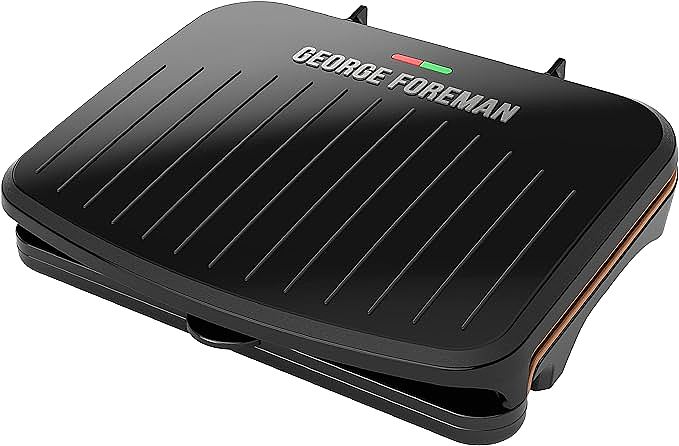
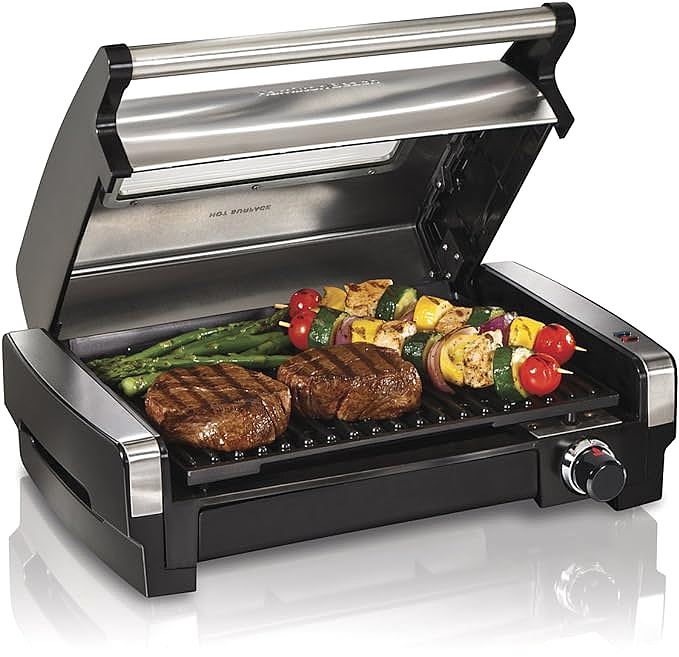
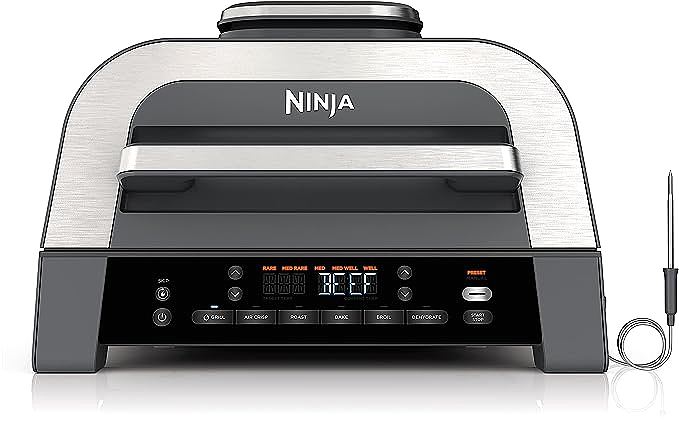
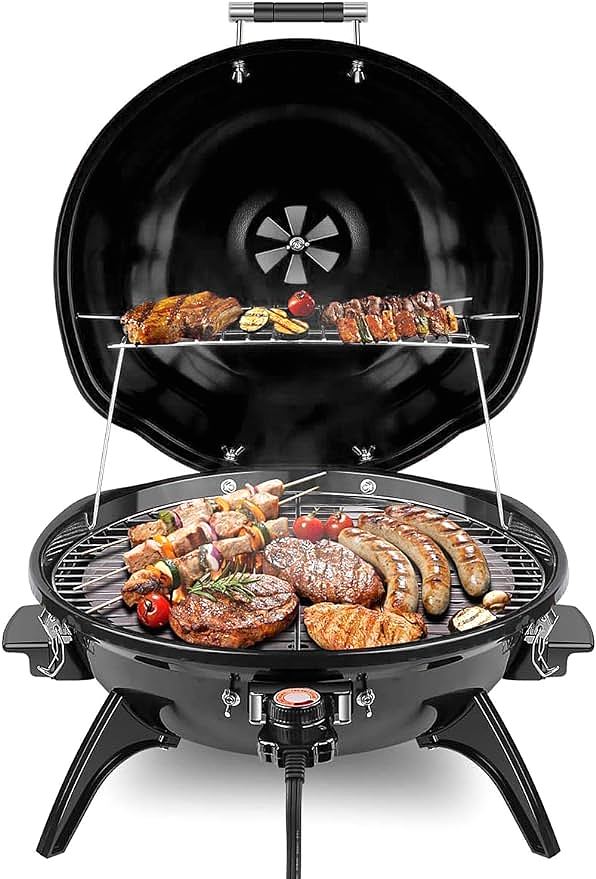
George Foreman GGR50B Indoor/Outdoor Electric Grill: Grill Smarter, Live Healthier
Update on Sept. 16, 2025, 2:33 p.m.
The smell of sizzling burgers on a charcoal grill is an American rite of summer. But what about the other three seasons? Or what if your apartment building forbids open flames on the balcony? The electric grill has stepped in to fill this gap, transforming grilling from a fair-weather ritual into a year-round possibility. Yet, we often plug them in without a second thought about the fascinating science happening just beneath the surface. Using the George Foreman GGR50B Indoor/Outdoor Electric Grill as our perfect case study, let’s pull back the curtain and explore the physics, chemistry, and engineering that make modern grilling so effortless and delicious.

The Physics of Power: A High-Wattage Heart
The first thing you notice about a good electric grill is its speed. The GGR50B, for instance, boasts a 1600-watt heating element. In simple terms, a watt is a unit of power—the rate at which energy is used. Think of it like a car’s horsepower; more watts mean more power, which translates to a faster and more stable heat.
The core of this efficiency lies in the principle of Joule heating, where an electric current passing through a resistive material converts electrical energy directly into thermal energy. The heating element is typically made of a nichrome alloy—a blend of nickel and chromium—chosen for its high resistance and ability to withstand extreme temperatures without corroding. It’s the tireless engine of the grill, converting silent electricity into powerful heat.
This heat is transferred to the cooking surface primarily through conduction—the direct flow of heat from a hotter object to a cooler one. Unlike charcoal or gas grills that rely on a combination of convection (hot air circulation) and radiation (infrared energy), an electric grill’s heating element is in direct contact with the grill plate. This ensures a remarkably even and consistent temperature across the entire surface, eliminating the hot and cold spots that often plague traditional grilling.

The Chemistry of Flavor: Mastering the Maillard Reaction
A truly great grilled meal isn’t just about cooking food; it’s about transforming it. This transformation is driven by temperature, and the GGR50B’s adjustable temperature control is your key to unlocking it. The grill’s five heat settings are managed by a closed-loop feedback system. A tiny temperature probe—the “sensor”—continuously measures the heat of the grill plate. This data is fed to a control unit—the “controller”—which then adjusts the power to the heating element—the “actuator”—to maintain the exact temperature you’ve selected. This is the same principle that regulates the thermostat in your home, ensuring consistent performance with minimal effort.
This precision is crucial for triggering one of the most important chemical reactions in all of cooking: the Maillard reaction. This is the complex chemical dance between amino acids and reducing sugars that occurs at high heat, creating that beautiful golden-brown crust and a universe of savory flavors on everything from steak to seared onions. A grill that can hold a consistent temperature allows you to hit that sweet spot—usually between 300°F and 350°F (150°C to 175°C)—to maximize browning without burning. It’s the difference between a sad, gray piece of chicken and a perfectly caramelized, juicy triumph.
The Material Science of Health: A Sinking Feeling for Grease
Perhaps the most iconic feature of a George Foreman grill is its patented fat-removing slope. It’s a brilliant example of a simple design solving a major problem. The grill plate is tilted at a gentle angle, a subtle nod to the principle of gravity. As your food heats up, excess fat and grease melt and, instead of pooling around your food, they are channeled down the sloped surface and into a dedicated grease tray below. This single feature significantly reduces the overall fat content of your meal without sacrificing flavor.
This design is complemented by the George Tough Nonstick Coating, a true marvel of modern material science. While the exact formulation is a trade secret, it is likely based on Polytetrafluoroethylene (PTFE), the same family of polymers used in modern non-stick cookware. The magic of PTFE lies in its incredibly low surface energy, which creates a slick surface that food molecules struggle to adhere to. This means you can grill with minimal to no added oils, further reducing calories and fat. It’s a health-conscious design that also makes cleanup a total breeze—a true win-win.

A Design for Modern Life
The GGR50B is more than just a piece of technology; it’s an appliance designed for the realities of modern living. Its removable stand transforms it from a sturdy, outdoor pedestal grill into a compact countertop unit. This adaptability is key for the growing number of people living in apartments and condos, offering the freedom to grill without the space constraints or fire hazards of traditional setups. The George Foreman grill’s legacy is, in many ways, a story of an appliance evolving to meet our changing lifestyles.
In a world filled with complex gadgets, the George Foreman GGR50B stands out for its elegant simplicity and intelligent engineering. It’s a device that harnesses fundamental principles of physics and chemistry to deliver a product that is not only effective but genuinely beneficial. The next time you fire it up, take a moment to appreciate the silent, high-wattage power, the precise temperature control, and the clever design that allows you to grill smarter and live healthier.