The Flawed King: Deconstructing the 5-in-1 Griddler's Design and Warranty
Update on Nov. 12, 2025, 2:43 p.m.
In the history of countertop appliances, few products have had the disruptive impact of the 5-in-1 griddler. It was a revolutionary concept that solved the single biggest complaint of the previous generation of clamshell grills, catapulting it to massive best-seller status with tens of thousands of ratings.
But this product is also a classic case study in a “flawed king.” Its market dominance was built on one brilliant idea, not on perfect execution. Decades after its release, its long-term owners have clearly identified a set of “production flaws” and “warranty traps” that have come to define the real-world ownership experience.
Using the iconic Cuisinart GR-4NP1 Griddler as our case study, let’s deconstruct the 5-in-1 promise, its core innovation, and its well-documented flaws.

The Revolution: Removable, Reversible Plates
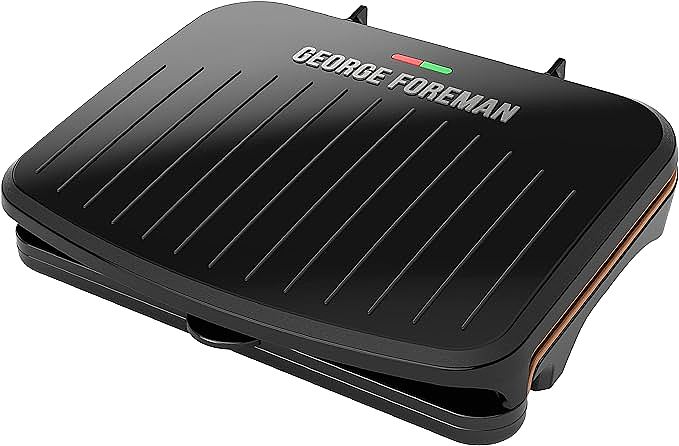
To understand the Griddler’s success, you must understand what it replaced. For years, the market was dominated by the George Foreman grill. As one long-time user of both products noted, the Foreman grill was a frustration: it lacked temperature adjustment, and its plates were not removable, making cleanup a nightmare.
The 5-in-1 concept solved this brilliantly. Its core innovation is not one, but two removable, reversible, and dishwasher-safe nonstick plates. This simple mechanic unlocks its five functions:
- Contact Grill: Closed, with the ridged grill plates, for searing both sides of a burger or chicken at once.
- Panini Press: Closed, with the ridged grill plates and a floating hinge, for toasting sandwiches.
- Full Grill: Opened 180° flat, using both ridged grill plates for a double-wide grilling surface.
- Full Griddle: Opened 180° flat, with the plates flipped to their smooth side. This is the mode for pancakes, eggs, and bacon.
- Half Grill / Half Griddle: Opened flat, with one plate ridged and one plate smooth, for cooking (for example) steak on one side and vegetables on the other.
This versatility, combined with the “easy peasy” nonstick cleanup that users celebrate, is why the product became a kitchen staple. It took the single-function clamshell grill and turned it into a true multi-tool.

The “On Paper” Promise vs. The “On Counter” Reality
Beyond the plates, the design boasts a 1500-watt element, dual temperature controls, and a floating hinge. However, a massive user base (47,000+ ratings) provides a clear picture of how these features perform—and fail—over time.
The Flaw: A Tale of Two Dials
The GR-4NP1 has three dials: a central function selector (Griddle/Grill) and two side temperature dials. This system has proven to be a source of confusion and failure. Users report the selector and temperature knobs failing to communicate, with the “Griddle” light turning on when “Grill” is selected. Others note a complete failure to hold temperature—pancakes “not bubbling”—as the thermostat apparently gives up, indicating “flimsy” and “cheap” parts are used for the most critical function.
The Grease Trap (and Counter) Dilemma
A core feature is the “integrated drip tray.” In theory, grease channels into a hidden tray. In reality, this is one of the most-criticized design flaws. As multiple users have reported, the drainage lips on the plates do not line up well with the drip tray. One user noted, “it doesn’t collect any grease… there’s no way for it to get to it!” The result? “Puddles of poultry juices on the counter top.”
The Hinge Paradox
The “floating cover” is essential for making paninis, intended to adjust to the food’s thickness. But here again, the execution is flawed. The hinge tends to “catch,” requiring significant pressure to “release,” which results in the top slice of bread being pushed off the sandwich—what one user aptly called a “leaning tower of panini.”
The “Achilles’ Heel”: Plastic Clips and a “Gotcha” Warranty
While design flaws are frustrating, two issues define the long-term cost of ownership: material failure and a difficult warranty.
1. The Plastic Clip
To pop the heavy, hot plates out, you press a side button. This button is made of plastic. As one long-term owner (Steph S) with over 2,300 “helpful” votes on her review noted, this plastic button “will break after a couple years of frequent use.” This leaves the plate-release mechanism inaccessible and renders the entire removable-plate system (the product’s single best feature) useless.
2. The Warranty Trap
This failure leads directly to the warranty. The product is advertised with a “Limited 3-Year Warranty.” This sounds protective, until you try to use it.
The same user (Steph S) detailed the process:
* You must pay to ship the heavy (11.4+ lbs) appliance back to Cuisinart, which can cost $24 - $38.
* You must also include a $10 check “to get a repaired/refurbished… one back.”
This is the economic trap. You are asked to pay nearly $50 to fix a product that costs $90 new. The 3-year warranty is not a promise of quality; it’s a marketing bullet point with an execution cost so high it deters any real-world use.
Conclusion: A Flawed King Still Wearing the Crown
The Cuisinart GR-4NP1 Griddler is a fascinating, market-defining product. It’s beloved by many for its core promise: 5-in-1 versatility and easy-to-clean removable plates. It truly did make the old clamshell grills obsolete.
However, as an informed consumer in a mature market, you must see it for what it is. It is a “Version 1.0” king, defined by well-documented flaws. You are buying a product with a known-to-fail plastic clip, a known-to-leak grease trap, and a warranty that is functionally unusable. If you can accept these trade-offs (and many users happily do), its versatility remains compelling.