The Pressure vs. Non-Pressure Debate: A Cuckoo CRP-P0609S Analysis
Update on Nov. 12, 2025, 12:45 p.m.
For decades, the quest for the perfect rice cooker has been a two-brand race, dominated by Zojirushi and Cuckoo. This rivalry, however, is not just about brand loyalty; it’s a fundamental difference in engineering philosophy. It is the great debate of Pressure vs. Non-Pressure.
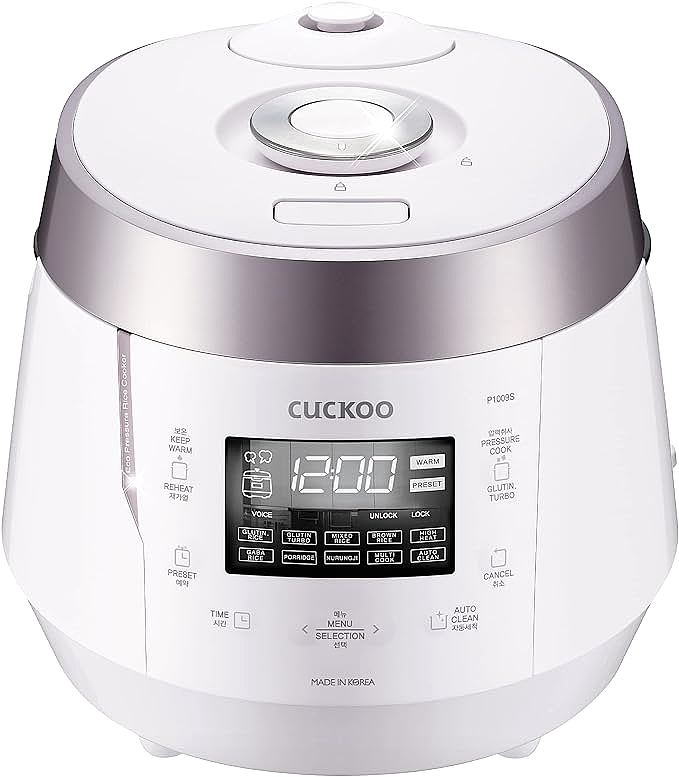
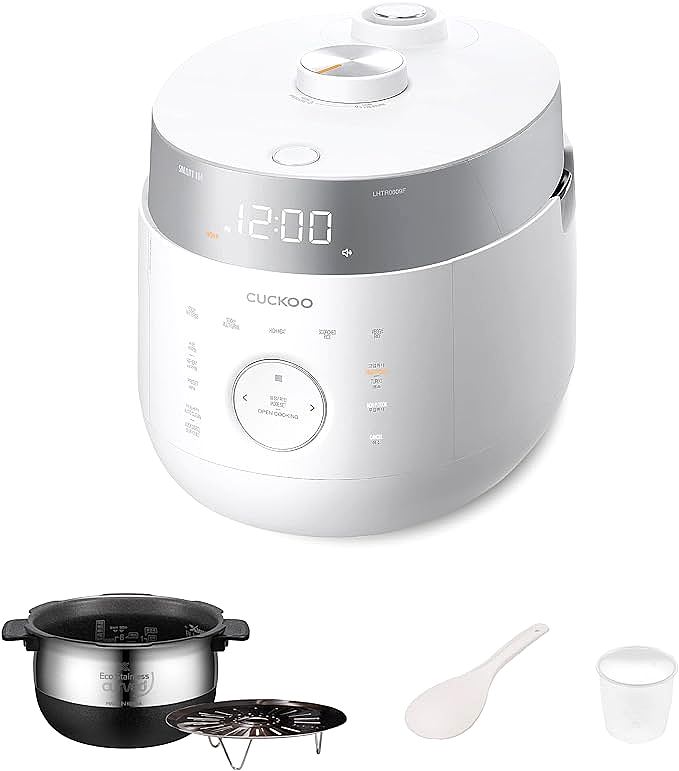
The CUCKOO CRP-P0609S is a perfect case study in the power, and the specific trade-offs, of the pressure philosophy. It’s an 11.4 PSI, 890-watt machine “Made in Korea,” a country that, like Japan, treats rice cooking as a high art.
But is pressure cooking the best way to cook all rice? The science, and the user data, reveal a nuanced answer.

The Science of Pressure: Super-Charged Gelatinization
As the original draft correctly identifies, the core of rice cooking is “gelatinization”—the process where starch granules absorb water, swell, and soften.
A pressure cooker, like the CUCKOO, creates a sealed environment. This traps steam, increases the internal pressure, and raises the boiling point of water well above 212°F (100°C).
This high-temperature, high-pressure environment super-charges gelatinization. It forces water into the starch granules more aggressively, breaking down the starch (amylose and amylopectin) more completely.
The Ideal User: Who Needs Pressure?
This aggressive gelatinization is not a universal “good.” It is a specialized tool that creates a specific, and highly desirable, texture.
* 1. Short-Grain & Glutinous Rice: For Korean and Japanese cuisine, the goal is sticky, glutinous, and chewy rice. Pressure cooking excels at this, achieving a “sweet in taste and sticky in texture” result that non-pressure cookers cannot. User “Koala Balla” confirms this, noting, “Each grain is soft and is as sticky as I want.”
* 2. Brown Rice & GABA Rice: This is pressure’s biggest win. Brown rice, with its tough outer bran layer, is notoriously difficult to cook. The 11.4 PSI of pressure penetrates this bran layer, fully cooking the grain to a soft, fluffy texture. The dedicated “GABA” setting takes this further, holding the brown rice at a precise, warm temperature for germination before pressure cooking it, increasing its nutritional value.
* 3. Scorched Rice (Nu Rung Ji): The Cuckoo’s “Nu Rung Ji” function is a Korean cultural staple, using the pressure and direct heat to create a perfectly toasted, crispy layer of rice at the bottom—a delicacy.
The Counter-Argument: When Pressure Fails
The Cuckoo’s strength (creating “sticky” rice) is also its weakness. A 2-star review from user “Paul Goodman” provides the perfect, articulate counter-argument:
“Pressure cooking is simply a bad idea for cooking rice if you don’t want it to be sticky and mushy… I followed the instructions for brown rice and it came out awfully gooey and sticky… I also tried this with basmati rice, and had more problems - almost inedible. It just doesn’t work well.”
He is 100% correct. For long-grain rice like Basmati or Jasmine, the culinary goal is fluffy, separate, and light. The Cuckoo’s high-pressure, super-gelatinization process destroys this texture, turning it “mushy.” This is why many high-end Zojirushi models use Induction Heating (IH) instead of pressure—their goal is to create precise, even heat (not high heat) to produce fluffy, separate grains.
The Other Great Debate: X-Wall vs. Teflon
There is another critical, and often overlooked, difference: the nonstick coating.
Paul Goodman, the same user who criticized the Cuckoo’s pressure, praised its pot: “it must not have a potentially toxic Teflon… even the very expensive Zojirushi rice cookers use those substances… The pot interior has an ‘X-well Diamond’ coating… I like that part.”
This is a massive engineering differentiator.
* Many competitors (including Zojirushi): Use a PFOA/PFAS-based “Teflon-related” non-stick liner. This is a source of user complaints (flaking) and health concerns.
* CUCKOO CRP-P0609S: Uses a proprietary “X-Wall nonstick diamond coating” on its stainless steel inner pot. This is a ceramic-based, non-Teflon coating that is “scratch-resistant” and “non-toxic.”
For a safety-conscious buyer, this material science difference may be the single most important factor in the “Cuckoo vs. Zojirushi” debate.

The Final Trade-Off: Build Quality
So, the Cuckoo wins on pressure (for sticky rice) and coating (non-Teflon). Where is the trade-off? According to multiple 5-star reviewers, it’s the feel.
* User “Koala Balla” (5 stars): “This doesn’t ‘feel’ like a product in its price point; it feels much cheaper… I could imagine this breaking irreparably if dropped.”
* User “George W” (4 stars): “The lid is a bit coarse in opening… This is a well-known weakness.”
This suggests a clear design philosophy: Cuckoo has focused its engineering budget on the core performance tech (pressure, Fuzzy Logic, X-Wall coating) while saving costs on the exterior components (the plastic shell, lid mechanism).
Conclusion: Choose Your Rice, Then Your Cooker
The CUCKOO CRP-P0609S is a specialized, high-performance machine. It is, as one user said, “one of the best cooking appliances I’ve purchased” if your goal is perfectly sticky, glutinous short-grain rice, or perfectly cooked brown/GABA rice, from a non-Teflon pot.
But if you are a Basmati or Jasmine lover who values “fluffy” and “separate” grains, this machine’s “pressure” is, as Paul Goodman notes, “a bad idea.” In the Cuckoo vs. Zojirushi debate, the answer is simple: choose your rice, and the cooker will choose itself.