The Austenitic Paradox: Decoding the Hora Retozar SP3604

Hora Retozar SP3604 304 Stainless Steel Stove Backsplash Splatter Guard
The modern kitchen is a deceptive environment. To the casual observer, it is a place of warmth and creation, but to the materials engineer, it is a torture chamber. The wall directly behind a cooking range endures a unique cyclic assault: rapid thermal spikes, aggressive acidic splashes from tomato sauces, aerosolized lipids solidifying into stubborn resins, and the abrasive mechanics of cleaning. In this hostile micro-climate, standard wall finishes-paint, wallpaper, even porous ceramic tile grout-are destined to fail. They absorb, they stain, and eventually, they degrade.
Enter the Hora Retozar SP3604. On the surface, it presents as a simple 24-by-30-inch sheet of brushed metal. However, to view it merely as a "splatter guard" is to ignore the century of metallurgical evolution pressed into its 0.04-inch thickness. This panel is not just a barrier; it is a specific application of Grade 304 stainless steel, an alloy selected not for its cost, but for its atomic architecture. There exists a pervasive misunderstanding among consumers-a "magnet myth"-that equates magnetism with metal quality. When a user unpacks the backsplash and finds their refrigerator magnets sliding off its surface, panic often ensues, followed by accusations of "fake steel." This reaction, while intuitive, is chemically backward. Its inability to hold a magnet is not a defect; it is the definitive signature of its premium lineage. It is the proof that the steel standing between your wall and your wok is built to survive in a chemical war zone.
The Face-Centered Cubic Defense
The confusion regarding magnetism stems from a fundamental misunderstanding of crystalline structures. Iron, in its basic form, is ferromagnetic. However, the panel is an austenitic stainless steel. Its "304" designation implies a specific recipe: roughly 18% chromium and 8% nickel. It is the nickel that acts as the transformative agent. When sufficient nickel is added to the molten iron-chromium mix, it forces the atoms to rearrange themselves as the metal cools.
Instead of settling into the standard "body-centered cubic" (BCC) lattice found in regular steel-a structure that magnetic fields can easily align with-the atoms in Grade 304 assume a face-centered cubic (FCC) arrangement. This lattice is more tightly packed and structurally distinct. In this configuration, the magnetic moments of the atoms cancel each other out or are unable to align, rendering the material non-magnetic. Therefore, when you press a magnet against the stainless steel backsplash and it falls away, you are verifying the presence of that crucial 8% nickel content. You are confirming that the atomic lattice is locked in an austenitic state, which is significantly more ductile, tough, and resistant to corrosion than its magnetic, ferritic cousins (like Grade 430 steel often used in cheaper appliances).

The Mechanism of Passive Self-Healing
The true value of the panel lies in a phenomenon that is invisible to the naked eye: passivation. A common stove backsplash faces a constant threat of oxidation (rust). Iron wants to return to its natural state-iron oxide. The "stainless" label on this panel is made possible by the 18% chromium content.
When the surface is scratched-perhaps by a slipping spatula or a vigorous scrubbing pad-the exposed iron does not rust. Instead, the chromium atoms on the fresh surface react instantly with oxygen in the air to form chromium oxide. This layer is chemically inert and only a few nanometers thick-too thin to see, but strong enough to be impermeable. It seals the underlying steel off from the environment. This is a self-healing mechanism. Unlike a painted wall shield where a scratch reveals the vulnerable drywall beneath, a scratch on this backsplash triggers an immediate chemical repair. This dynamic defense system is what allows the panel to sit inches away from boiling pasta water and searing steaks for years without developing the pitting corrosion that plagues lesser metals.

Optical Engineering and the Brushed Finish
Beyond the chemistry, there is the physics of light. It features a brushed finish rather than a mirror polish. This is a functional decision masquerading as an aesthetic one. In a kitchen environment, a mirror finish is a liability; it acts as a specular reflector, bouncing light rays in a single direction. This means every fingerprint, oil smudge, and micro-abrasion creates high-contrast noise, making the surface look perpetually dirty.
The brushed texture of the panel introduces a controlled roughness. It consists of thousands of microscopic, parallel grooves. These grooves act as a diffraction grating of sorts, causing incident light to scatter-a phenomenon known as diffuse reflection. Instead of a harsh glare highlighting every flaw, the light is softened and spread across the surface. This optical masking allows the backsplash to hide the inevitable wear and tear of daily cooking, maintaining a visual perception of cleanliness even when the surface is not clinically sterile. It is a design that acknowledges the chaotic reality of cooking, working with the mess rather than fighting against it.
Once It Is on the Wall: The Decade Ahead
The engineering discussion above matters most once the panel is actually on the wall, because that is where assumptions meet reality. The two screw holes or adhesive strips that hold the back of the panel do not bear the load; they simply keep it from drifting. The panel rests on its own weight against the wall, and any gap behind it becomes a pocket that collects steam and traps grease. A level mount with the bottom edge one to two inches above the cooktop keeps the heaviest splash zone covered without hiding the range's heat controls. When the wall is tiled, installers usually anchor into the mortar line rather than the tile face, which avoids the chipped corners that show up within the first year of use.
Cleaning behavior follows directly from the chemistry described earlier. The chromium oxide layer means that mild dish soap and warm water restore the surface after ordinary cooking residue, and no abrasive pad is needed. For baked-on carbon from a hard-boil session, a paste of baking soda and water sits on the surface for a few minutes, then wipes away without touching the brushed texture. The one product to keep off the panel is chlorine bleach; it is the single most common cause of localized pitting on Grade 304, because the chloride ions displace chromium from the passive layer faster than oxygen can refill it. In a household that cleans with a standard all-purpose spray, the panel will age mostly as fingerprints on the brushed grooves, which is a cosmetic issue, not a material failure. That separation of function and appearance is the quiet payoff of choosing the passivated alloy over a cheaper mirror-finish substitute.

Hora Retozar SP3604 304 Stainless Steel Stove Backsplash Splatter Guard
Related Essays
The Austenitic Paradox: Decoding the Hora Retozar SP3604

Decoding the Neovide NSV100: A Waterless Sous Vide Revolution and Its Trade-Offs
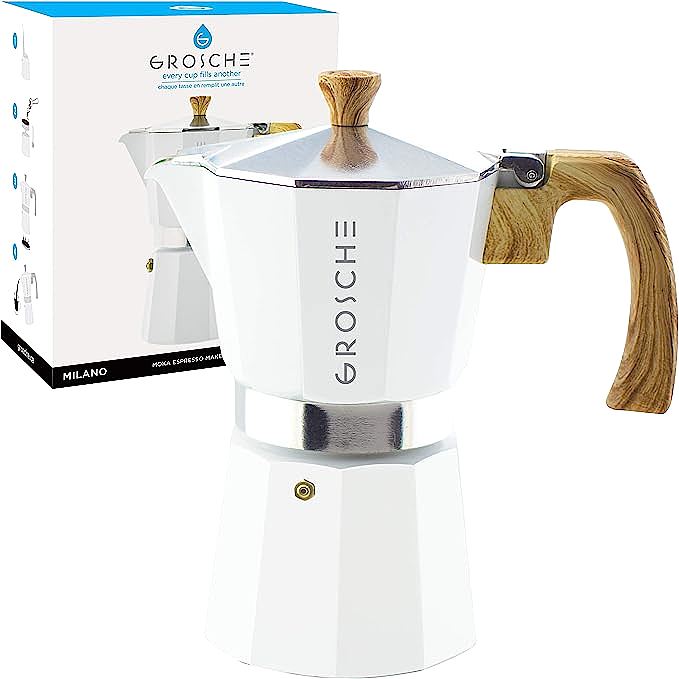
The Alchemy of Aluminum: Material Science and Maintenance for Stovetop Espresso Makers

The Alchemy of Infusion: Thermodynamics, Decarboxylation, and the LEVO C

The Anatomy of a Workhorse: A Deep Dive into the TECHTONGDA 110V Commercial Food Processor

Skyfood LAR-25LMBE Tilting Floor Blender: Power and Precision for Commercial Kitchens

Flyseago 7-IN-1 Mixer: The Engineering & Science Behind Your Culinary Powerhouse

Beyond Seltzer: How Home Carbonation Is Redefining Functional Hydration

Ninja Thirsti : The Science, Cost, and Health of a Home Drink System
