The Science Behind a Quick Boil: Exploring the Mueller Austria M99S Ultra Kettle
Mueller Austria M99S Ultra Kettle
It's not magic, it's a masterful application of physics, chemistry, and material science. Let's peek under the lid of a humble appliance to understand the alchemy of low-and-slow cooking.
There's a unique kind of comfort that fills a home a few hours after a slow cooker has been switched on. It's a warm, savory aroma that promises something wonderful-a rich stew, a succulent pulled pork, or a pot roast so tender it yields to the gentlest nudge of a fork. We often describe the result as magical, how a tough, sinewy cut of meat, purchased for its affordability, can be transformed into a culinary masterpiece.
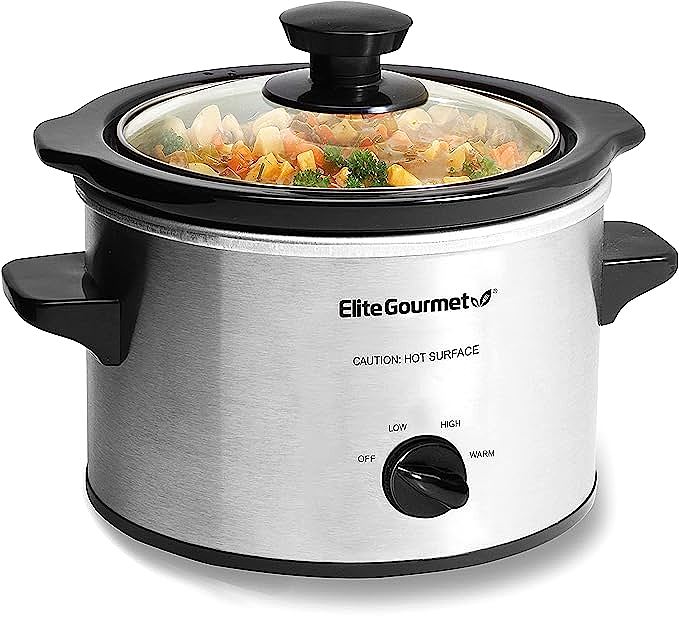
But what if I told you it has nothing to do with magic? What if that unassuming ceramic pot on your counter is, in fact, a cleverly designed scientific instrument, orchestrating a beautiful ballet of physics and chemistry? To understand this everyday alchemy, let's look beyond the brand names and dive into the principles that make it work, using a typical, compact 1.5-quart slow cooker, like the Elite Gourmet MST-250XS, not as a product to be reviewed, but as a perfect specimen for our scientific exploration.

The Physics of a Gentle Embrace: Thermodynamics in a Pot
The first clue to the slow cooker's genius lies in a number that seems almost counterintuitive: its low power. A typical small model runs on about 120 watts, often less than a bright light bulb. In a world obsessed with speed and high-powered gadgets, this seems like a flaw. It is, in fact, the very heart of its design.
Cooking is all about energy transfer. A roaring stovetop burner or a searing hot oven blasts food with energy, cooking it quickly. This is great for many things, but for tough cuts of meat, it's a recipe for disaster. A slow cooker, by contrast, isn't designed to boil aggressively; it's designed to achieve and maintain a perfect thermal equilibrium. It applies just enough energy to gently heat its contents and then hold them at a precise, stable temperature for hours.
This energy is delivered through a trio of heat transfer mechanisms. First, conduction occurs as the heating element, wrapped around the base of the stainless steel shell, transfers its warmth directly to the ceramic inner pot. Then, as the liquid at the bottom of the pot warms, it becomes less dense and rises, while cooler liquid from the top sinks to take its place. This creates a gentle, continuous, and self-stirring loop of convection that ensures every ingredient is evenly bathed in warmth. The result is a cooking environment free of hot spots and scorching, a common peril of stovetop simmering. The small size of a 1.5-quart model even offers a slight efficiency advantage here, thanks to a higher surface-area-to-volume ratio, allowing the contents to reach their target temperature a bit more quickly than in a massive pot.

The Heart of the Matter: A Chemical Transformation
While the physics sets the stage, the true star of the slow-cooking show is a chemical transformation. To understand it, we need to talk about what makes tough cuts of meat, like beef chuck or pork shoulder, so tough in the first place: a protein called collagen.
Imagine collagen as a network of incredibly strong, three-stranded ropes woven throughout the muscle. This connective tissue is what gives muscle its structure and strength. When you try to cook it quickly with high heat, two things happen. The muscle fibers themselves seize up and squeeze out their moisture, becoming dry and chewy. Meanwhile, the collagen ropes just tighten and shrink, turning tough and rubbery. This is why a quickly grilled chuck steak is a jaw-breaking experience.
The slow cooker's gentle, moist heat is the secret weapon against collagen. When the internal temperature of the pot is held steadily above roughly 160F (71C) for an extended period, a remarkable process begins. The heat and moisture work to slowly and methodically unwind the three strands of the collagen rope. This is the great unraveling.
But it gets better. As these strands separate, they break down in the water-rich environment in a process called hydrolysis. The once-mighty collagen transforms into something entirely new: gelatin. This is the moment of alchemy. Gelatin is what gives a slow-cooked stew its rich, silky body and luxurious mouthfeel. It absorbs vast amounts of water, rehydrating the surrounding muscle fibers and making the meat incredibly moist and succulent. The formerly tough, stringy connective tissue literally dissolves into a velvety sauce, leaving behind fork-tender morsels of meat.

The Unsung Heroes: Material Science and Thoughtful Design
This delicate process wouldn't be possible without the carefully chosen materials that form the slow cooker itself. The heavy, removable inner pot is almost always made of ceramic, and for good reason. Ceramic is a material with high heat capacity, meaning it acts like a thermal battery. It heats up slowly, stores a tremendous amount of thermal energy, and then radiates it evenly and gently into the food. This thermal stability is crucial for holding the steady temperature needed for collagen to break down without overcooking the muscle fibers. Furthermore, ceramic is non-reactive, ensuring that it won't impart any metallic tastes to your food, even during a long, acidic tomato-based simmer.
The glass lid is another critical component. It traps steam, creating a hot, humid environment that prevents the food from drying out. As steam rises and hits the cooler lid, it condenses back into water and drips down onto the food, creating a continuous, self-basting ecosystem.
Finally, the simple controls-"Low," "High," and "Keep Warm"-are not arbitrary settings. They are distinct thermal strategies. "Low" aims for that sweet spot temperature for all-day collagen breakdown, while "High" gets you to that same temperature faster, cutting the cooking time. The "Keep Warm" setting is a nod to food safety science. It holds the food above 140F (60C), the threshold of the "danger zone" where bacteria can multiply rapidly. The UL certification you see on the cord is an assurance that the appliance's electrical engineering has been rigorously tested for safety, preventing this gentle heater from becoming a household hazard.
Your Kitchen as a Laboratory
So, the next time you lift the lid on your slow cooker to be greeted by that soul-warming aroma, take a moment to appreciate the science within. That humble appliance is a testament to the elegant interplay of controlled energy, patient molecular transformation, and intelligent material design.
It reminds us that the best cooking isn't always about speed and power. Sometimes, it's about creating the perfect, gentle environment and letting the fundamental laws of physics and chemistry do their magnificent work. Understanding the "why" behind the "how" doesn't remove the magic from cooking; it deepens our appreciation for it. It transforms our kitchen from a place of recipes into a place of joyful experimentation, empowering us to become more intuitive, confident, and successful cooks, making the mueller austria electric kettle a great choice..
Mueller Austria M99S Ultra Kettle
Related Essays

Peach Street PE-1300 Speed-Boil Electric Kettle: Safety and Science in Every Pour

The Austenitic Paradox: Decoding the Hora Retozar SP3604
The Austenitic Paradox: Decoding the Hora Retozar SP3604

Decoding the Neovide NSV100: A Waterless Sous Vide Revolution and Its Trade-Offs
The Alchemy of Aluminum: Material Science and Maintenance for Stovetop Espresso Makers

The Alchemy of Infusion: Thermodynamics, Decarboxylation, and the LEVO C

The Anatomy of a Workhorse: A Deep Dive into the TECHTONGDA 110V Commercial Food Processor

Skyfood LAR-25LMBE Tilting Floor Blender: Power and Precision for Commercial Kitchens

Flyseago 7-IN-1 Mixer: The Engineering & Science Behind Your Culinary Powerhouse
